Boutique Apartments Costalegre
Playa de Coco
Playa de Coco

The following article written by Joseph Sorrentino, Published on Thursday, November 17, 2022, Mexico Daily News
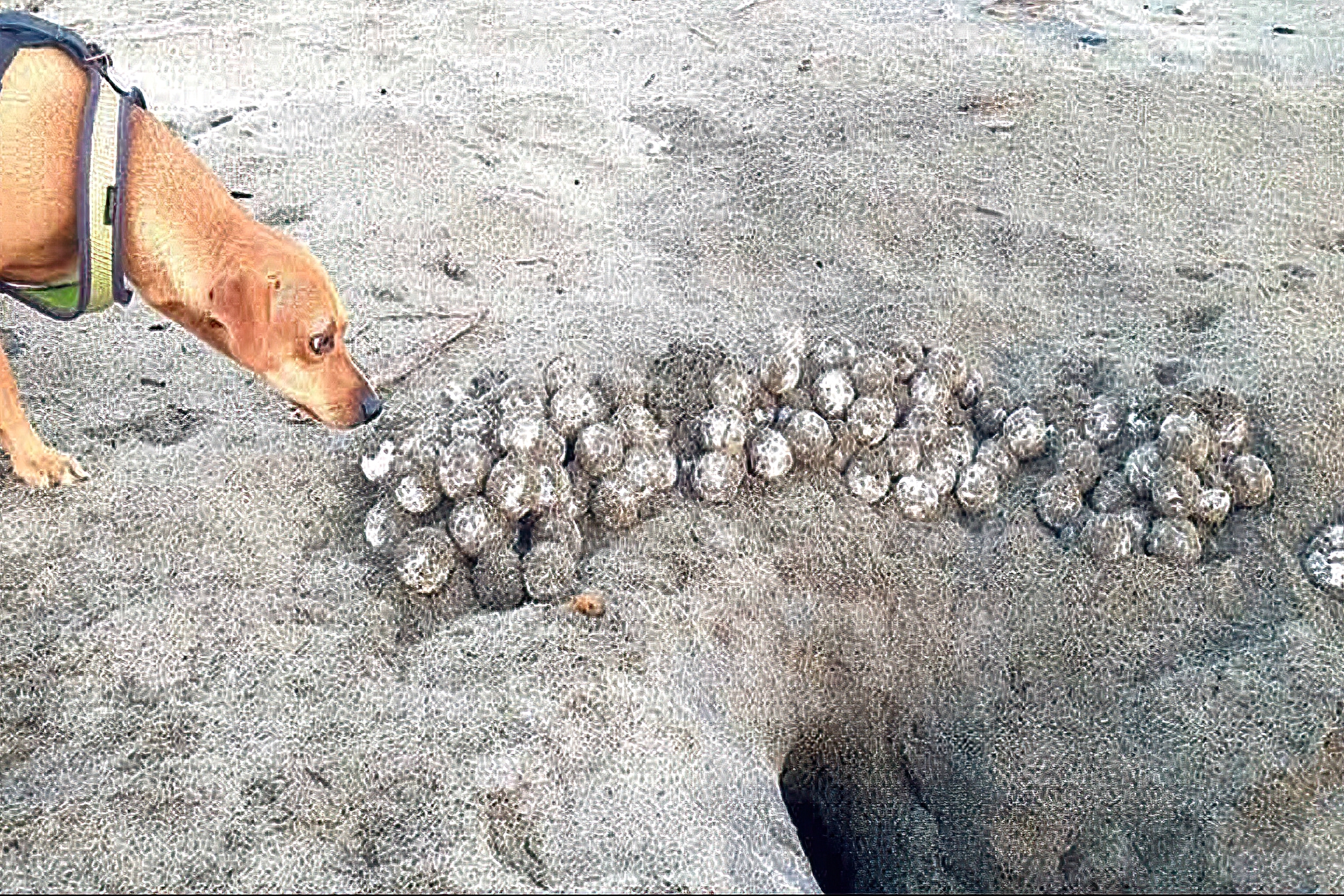
A turtle's best friend: Coco the dog sniffs out the marine animals' eggs for conservation, She trained herself to dig up turtle nests so the endangered eggs
can be transported to safety.
Sea turtles are part of life on this coastline. During nesting season, females come ashore on Playa de Coco to lay their eggs, and the beach becomes an active conservation area. Protecting nests and hatchlings helps give these remarkable animals a better chance of completing a life cycle that begins here on the sand and continues in the Pacific. The apartments offered through Boutique Apartments Costalegre are located at Villa Star of the Sea on Playa de Coco, where sea turtle preservation has long been part of life on the property and beach. Working with local conservation partners and under appropriate supervision, nesting areas are monitored during the season and vulnerable eggs may be moved to protected incubation areas until they hatch.
Living on Playa de Coco means sharing the coastline with wildlife as well as people. Sea turtle nesting and preservation are part of that environment and part of the history of Villa Star of the Sea. Residents may occasionally have the opportunity to observe conservation work or a hatchling release, but the real value is simpler: knowing that this remarkable stretch of Costalegre remains a place where people are actively working to protect the creatures that return to its shore.
Coco sits in my lap in the pre-dawn darkness, shifting anxiously and sniffing the salty air as she waits for her mission to begin. The jacket this dog wears
announces the work she does: Turtle Egg Rescue Agent. Eileen Hoeter, her owner and the person in charge of Coco Turtle Rescue, one of the two turtle sanctuaries
in Playa Coco, Jalisco, puts her four-wheel drive jeep in gear, and we start for the beach.
Hoeter and her husband Jedd have been running their turtle sanctuary, since they moved to Playa Coco in 2015 and built Villa Star of the Sea' a small resort.
"We'd walk on the beach, and we'd see baby turtles or females laying eggs," she said. "Then Ecco-Bana, an animal rescue organization in Barra Navidad' asked
us to build a turtle sanctuary."
Since then, when she's in Jalisco, she's out virtually every day before dawn' searching for turtle nests. "You have to be out early to beat the poachers and
the dogs," she said. She is certified by and works under the supervision of the University of Guadalajara.
Coco, however, hasn't had any training. Adopted as a puppy from a friend who'd found Coco's mother as a pregnant stray, she tagged along on the turtle egg rescue missions.
Before Coco, Hoeter was on her own. "I'd get on my hands and knees and dig." That could take her up to an hour. Then, one day, without prompting, Coco started digging.
"She can smell the eggs and turtles," Hoeter said.
Coco will dig deep until she is millimeters from the eggs. She's careful not to damage them and lets the humans take over. She also guards the eggs from strangers until
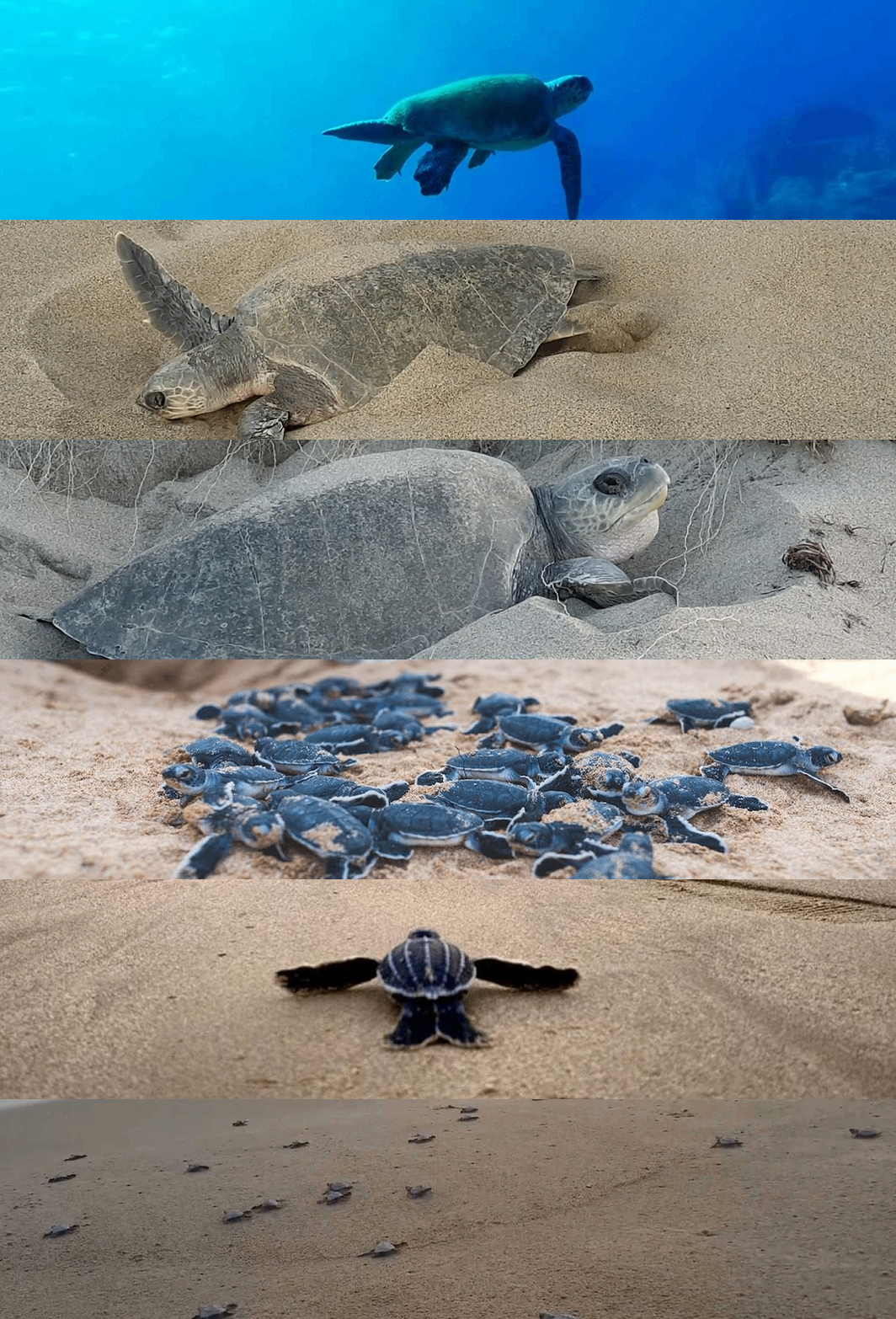
they are safely in the sanctuary, and then again later as the hatchlings make their way to the sea. Three species of turtles lay eggs on this beach; olive ridley and
green turtles are both designated as "vulnerable," while the third, the leatherback turtle, is critically endangered.
To find nests, Hoeter scans the beach for turtle tracks, which look remarkably like tire tracks, except turtle tracks run perpendicular to the water's edge
while tire tracks mostly run parallel. As we drive out on a mission, Hoeter pointed out holes surrounded by dried egg shells saying, "Those eggs were eaten
by dogs." She also showed me empty holes. "Those are poachers," she said. "They aren't dangerous."
Despite a five-year jail term for poaching, people steal eggs to sell for their supposed aphrodisiac properties. While she doesn't condone poaching, she's
understanding. "They sell the eggs for five or eight pesos," she said. "They're trying to make some money."
When Hoeter spied an eagle with a baby turtle in its beak, she knew there was a nest nearby; Coco located it immediately, with six new turtles still inside.
With the sun already up, if Coco hadn't found them, they almost certainly would have dried out and died before reaching the sea, she said.
Coco located another nest and dug furiously, stopping every few seconds to put her nose deeper in the hole. As soon as she saw white - indicating she'd found
the eggs - she stopped digging and backed off, letting Hoeter take over. "You must be very careful," Hoeter said. "I loosen the eggs and I close my eyes.
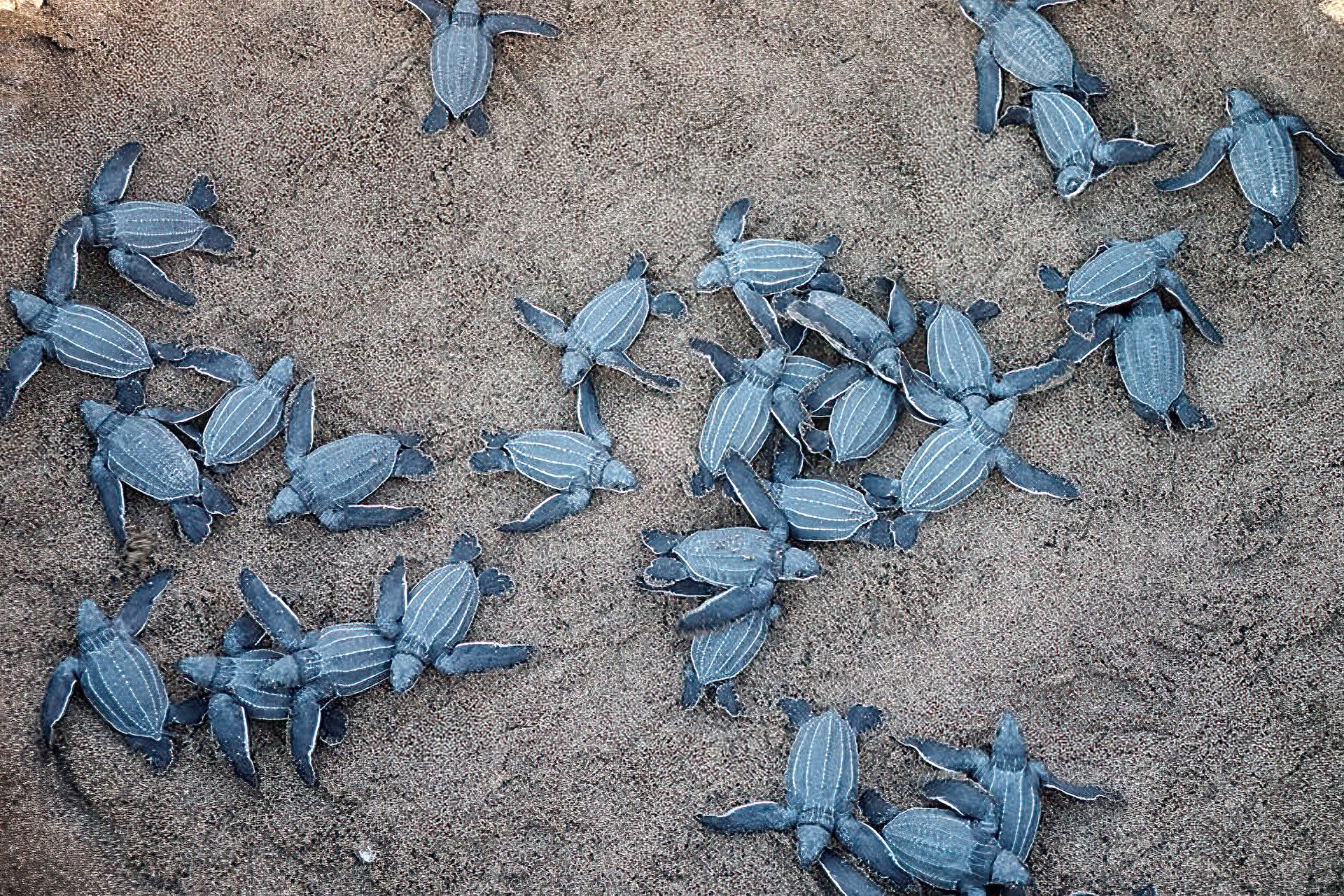
When Coco later found yet another nest with 40 or 50 newly hatched turtles, Hoeter placed them in a bucket with some water and took them to the water's edge.
"You don't put them directly in the water," she said. "They pick up something from the sand. Sand here is different from sand in all other places. After
three years, females come back here [to lay their eggs]. Males never come back."
At the turtle sanctuary, Hoeter digs holes the same depth as the original nests, gently places the eggs in and fills them with sand. A stick marks the location.
Fifty-five days later, between 75% and 85% of the eggs will hatch, and the babies will be released to the sea.
"Eggs that are laid are asexual,"Hoeter said. "The higher the eggs are [in a nest], the warmer they are and they will become females. It,s cooler at the bottom,
and they will become males. With the climate warming, there will be more females." Baby turtles are a study in determination.
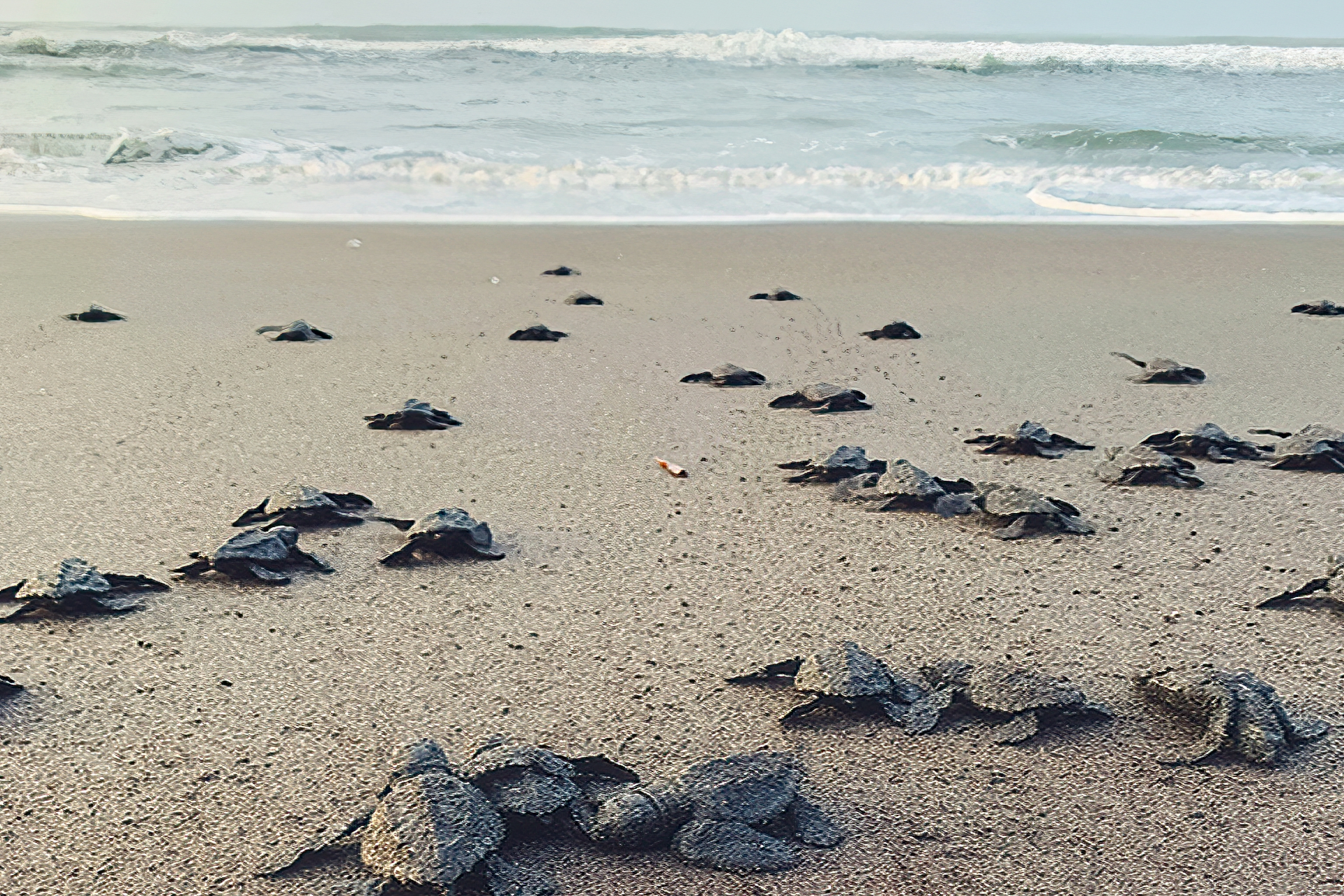
After digging out from a nest buried at least two feet deep, the new turtles head to the water, 50 yards away. They use their flippers like paddles, pushing
themselves forward, pausing every three or four seconds to gather themselves for another push. A wave comes in and knocks them back, turning them around, but
they point themselves toward the ocean and continue. Finally, they disappear into the water, and the ocean takes them on their inevitable journey.
Baby turtles face all kinds of challenges: as they cross the beach, they'll be eaten by eagles and terns. Crabs drag them into their holes. Even if the turtles
reach the water, they become food for a number of predators.
If they live, they soon are required to find food. Babies have a food sac that keeps them nourished for three days. but after that, they begin hunting for a
variety of aquatic insects, plants and small fish.
Hoeter said that it's thought that one out of a 1,000 survive to adulthood.
Sea Turtle Preservation: Why It Matters
Sea Turtle Preservation at Boutique Apartments Costalegre (Costalegre)
Support for this work has also come through the onsite Restaurant La Sirena Gordita, helping with practical costs such as turtle-rescue vehicles, fuel, maintenance and sanctuary upkeep. For long-term residents, this is not a packaged resort attraction; it is simply one of the extraordinary things that can be encountered while living beside a working nesting beach. Turtle activity is seasonal and, of course, nature sets the schedule.
In Summary . . .